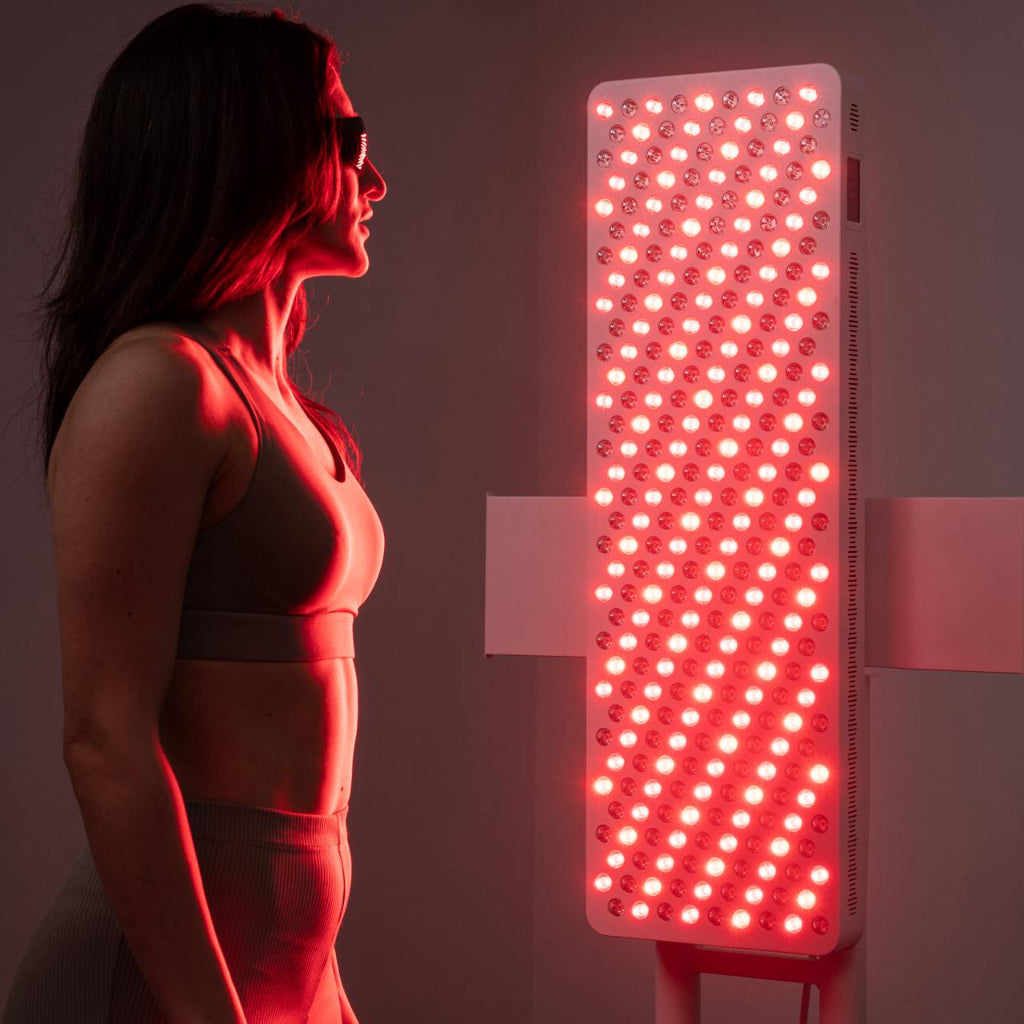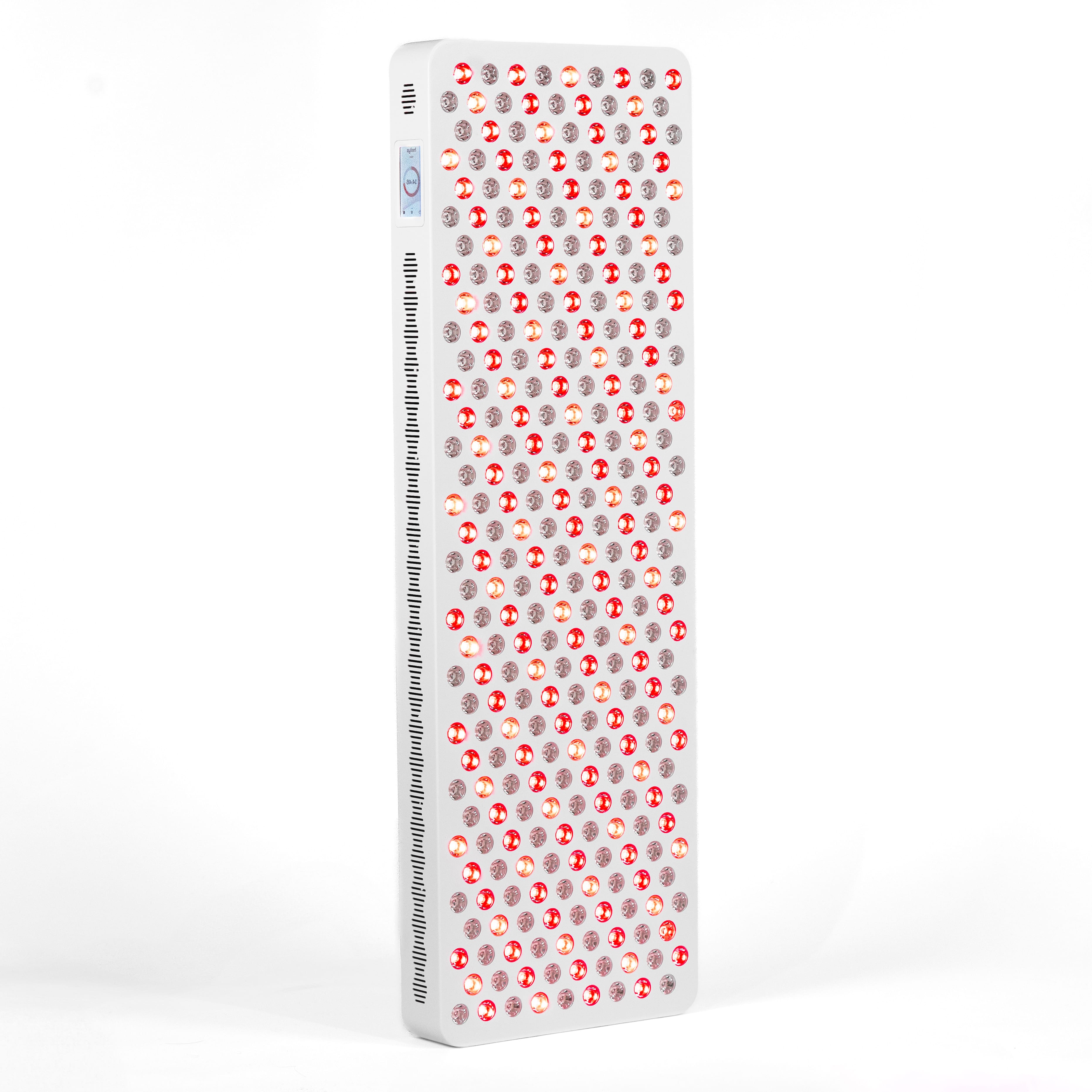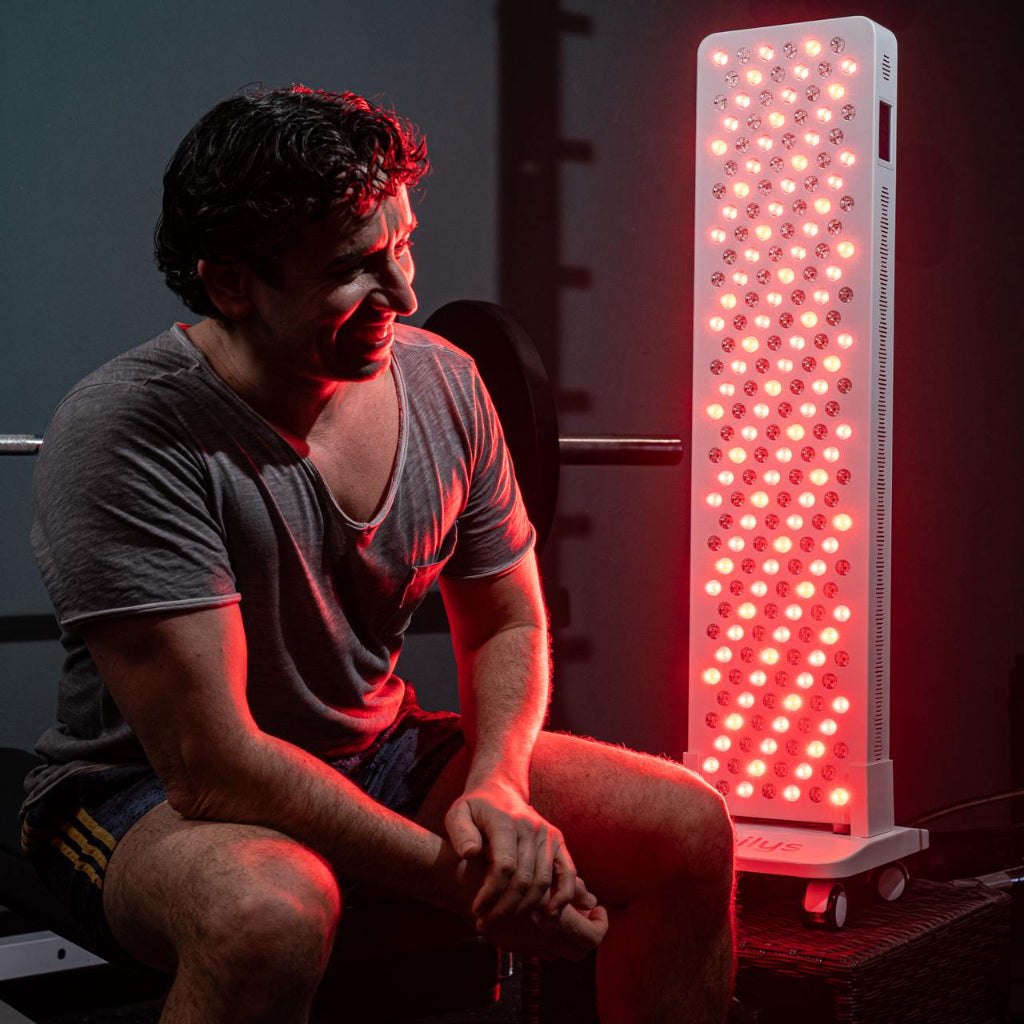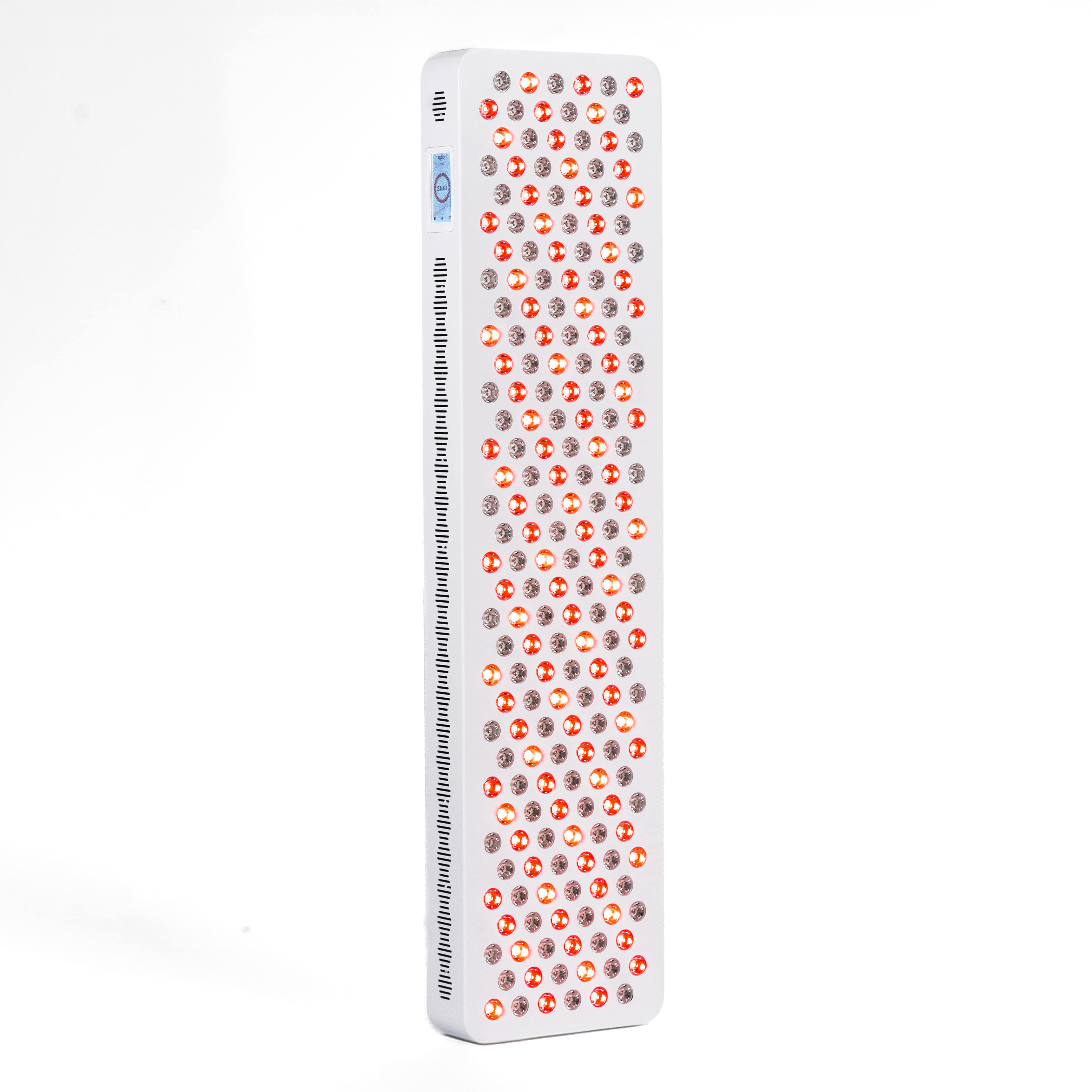


Red light therapy is enjoying increasing popularity due to its diverse health benefits – from anti-aging and pain relief to deep muscle regeneration. However, to truly reap these benefits, correct dosage is essential. This guide explains in a clear and personal way how to optimally dose red light therapy and adapt it to your individual needs.
The basics of dosage in red light therapy
The correct dosage depends on various factors: power (irradiance), wavelengths, distance to the light source, exposure time, and the specific therapeutic goals. The aim is to supply the cells with sufficient light without overstimulating or understimulating them.
Irradiance
Irradiance is measured in milliwatts per square centimeter (mW/cm²) and describes how intensely the light strikes a specific area. Studies show that positive effects of red light therapy occur at light intensities between 20 and 200 mW/cm² .
An example of the calculation:
If a 200-watt device emits light onto an area of 2000 cm², the following power output results:
200.000 mW / 2000 cm² = 100 mW/cm²
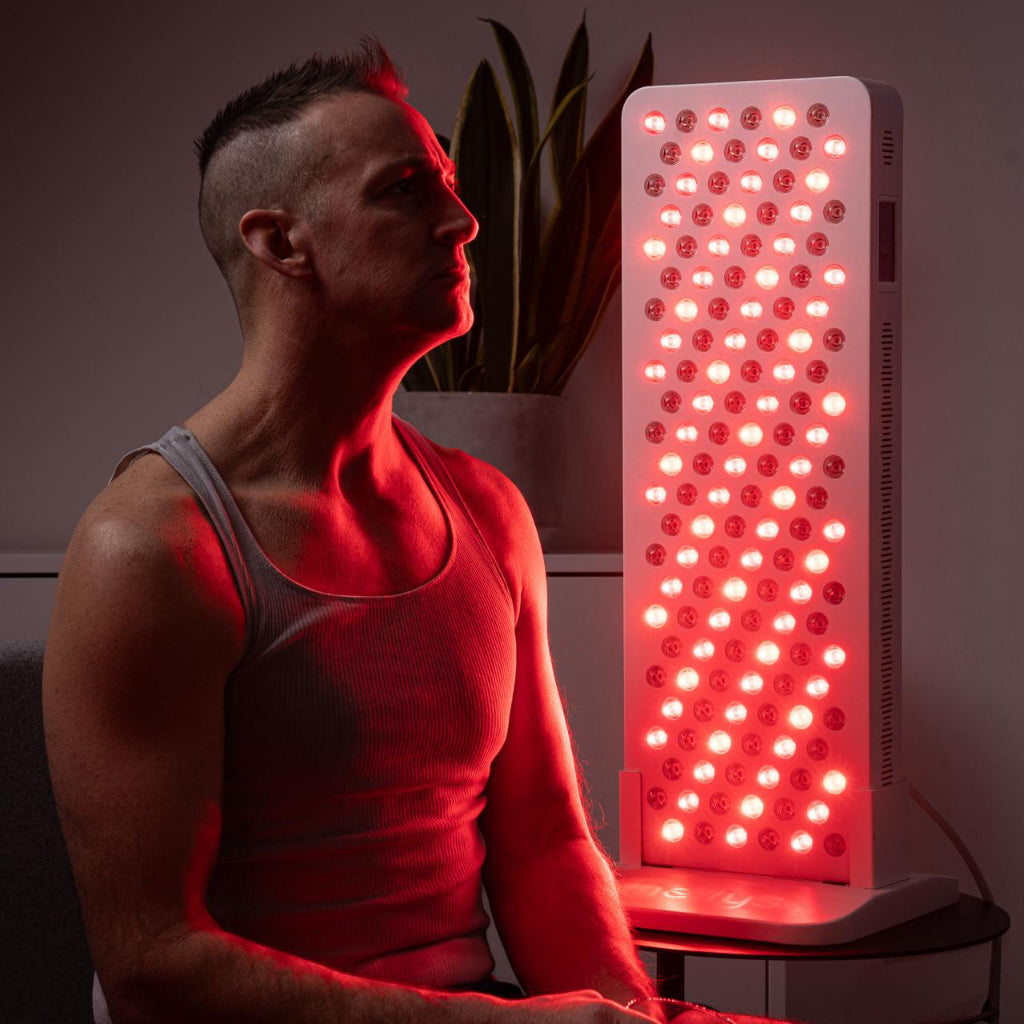
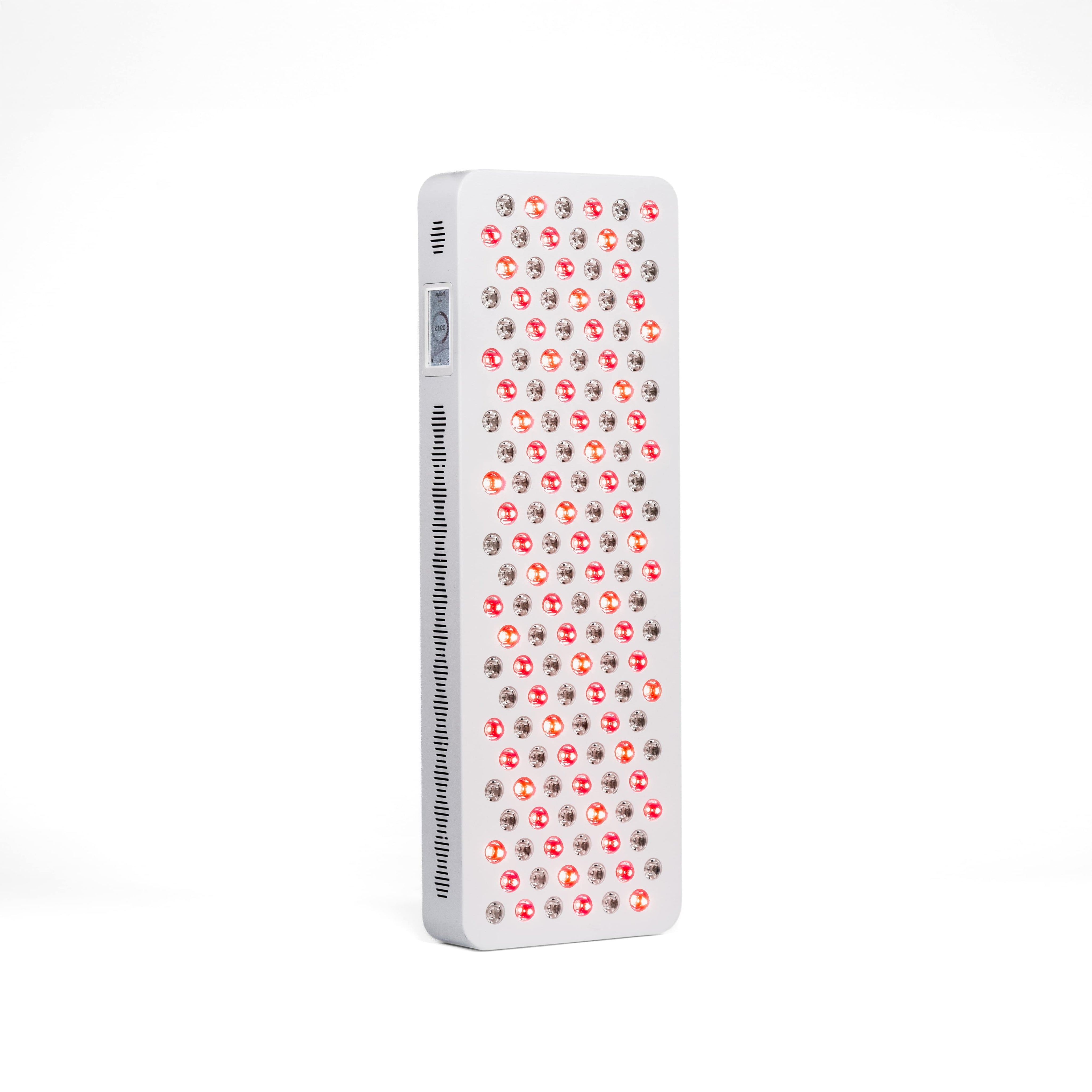
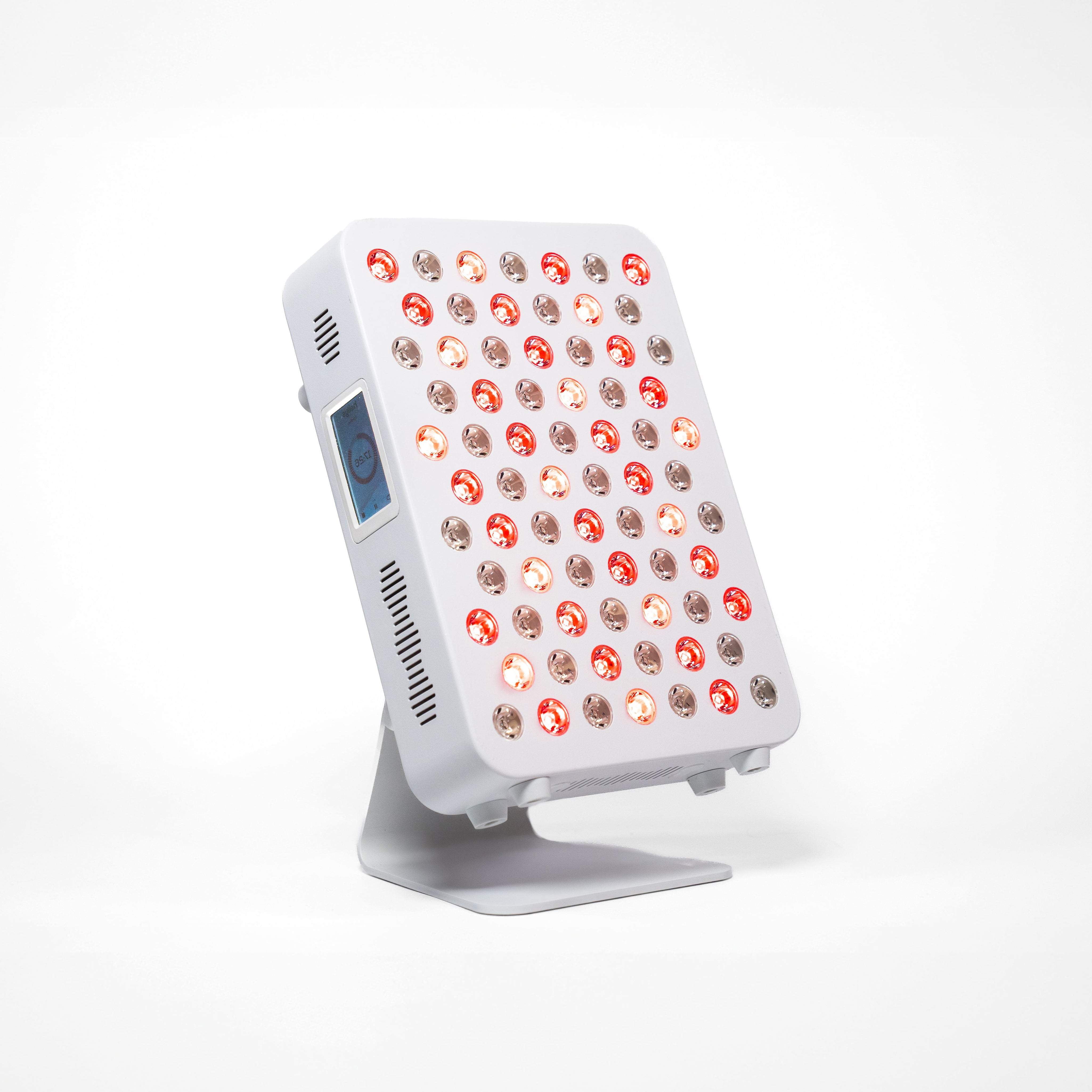
An irradiance between 50 and 100 mW/cm² is optimal for most applications. Typical heilys gene panels have an average irradiance of 80 mW/cm² .
Factors that influence irradiance
-
Distance to the light source: The intensity decreases dramatically with increasing distance. Optimal distance: 15 cm - 90 cm .
-
Wavelengths: Effective wavelengths are mainly in the red spectrum (620–700 nm) and in the near-infrared spectrum (700–1000 nm).
-
Device size and treatment area: Larger devices cover more area and save time.
-
Actual vs. stated power: Often the actual irradiance is 25-50% lower than the stated power. A PAR meter can help here.
Exposure time
The total dose value is calculated by multiplying the irradiance by the exposure time:
Dosis (J/cm²) = Bestrahlungsstärke (mW/cm²) × Zeit (Sekunden) × 0,001
For general applications, a value between 3 and 50 J/cm² is recommended, depending on whether superficial or deeper tissue layers are being treated.
Optimal dosage for different applications
Skin problems (anti-aging, acne, infections)
-
Distance: 30 - 90 cm
-
Dose range: 3 - 15 J/cm² per area
-
Optimal exposure time:
-
1 - 4 minutes at a distance of 30 cm
-
1.5 - 5 minutes at a distance of 45 cm
-
2 - 7 minutes at a distance of 60 cm
-
3 - 14 minutes at a distance of 90 cm
-
Pain relief & muscle regeneration
-
Distance: 15 - 30 cm
-
Dose range: 10 - 60 J/cm² per area
-
Optimal exposure time:
-
2 - 7 minutes at a distance of 15 cm
-
5-10 minutes at a distance of 30 cm
-
Anti-inflammatory
-
Distance: 15 - 30 cm
-
Dose range: 10 - 40 J/cm²
-
Treatment duration: 2 - 10 minutes, depending on the intensity of the inflammation.
Eye health (vision improvement)
-
Distance: 30 cm
-
Dose range: 3 - 15 J/cm²
-
Exposure time: 1 - 5 minutes
-
Studies show that daily applications of 670 nm light for 3 minutes in the morning can produce significant improvements.
Immune boost
-
Distance: 30 cm
-
Dose range: 10 - 30 J/cm²
-
Treatment duration: 5 - 10 minutes on the chest and neck area.
Melatonin production & sleep quality
-
Distance: 30 - 60 cm
-
Dose range: 3 - 15 J/cm²
-
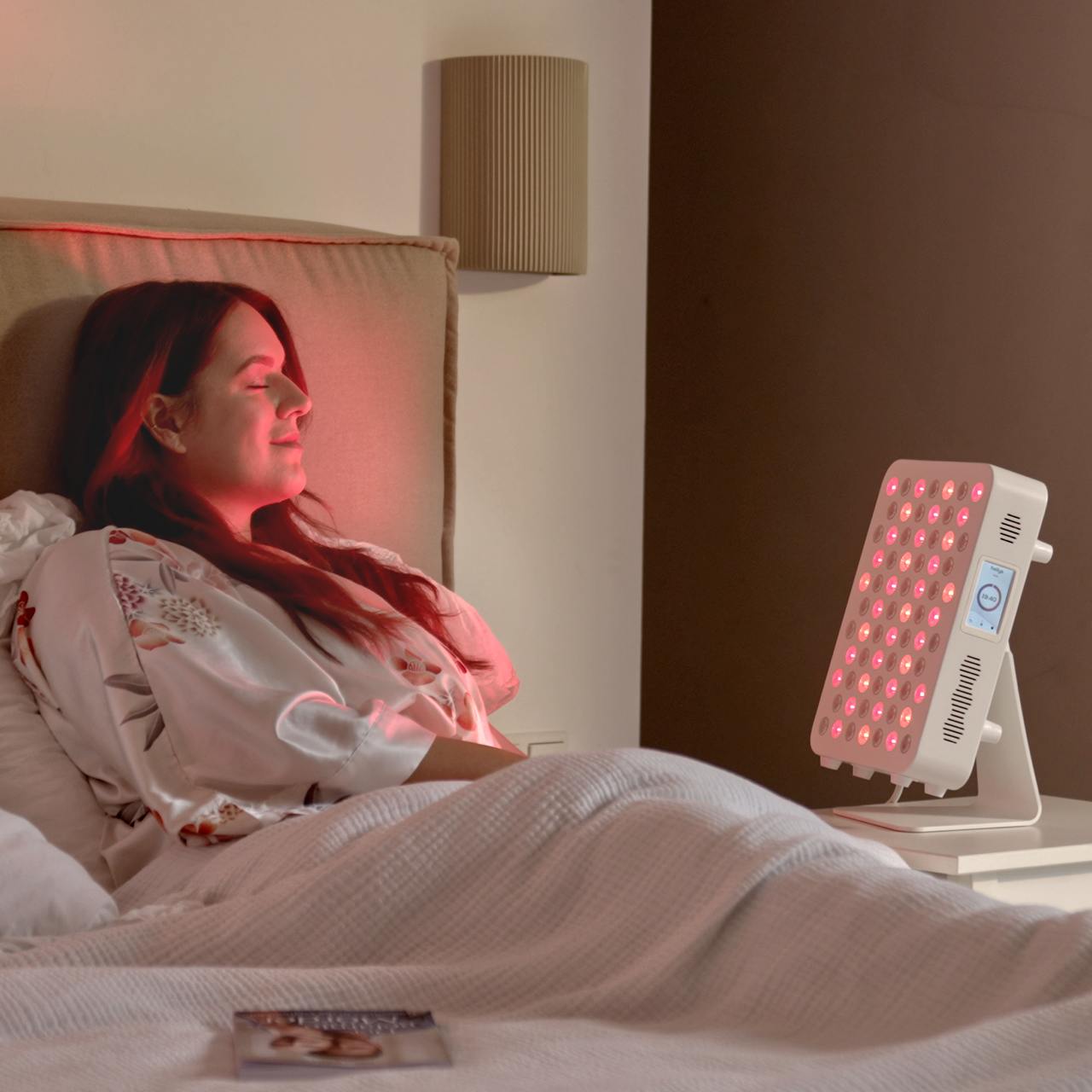
Treatment duration: 5 - 10 minutes, preferably in the evening.
Muscle regeneration after exercise
-
Distance: 15 - 30 cm
-
Dose range: 20 - 50 J/cm²
-
Treatment duration: 5 - 15 minutes on affected muscle areas.
Biphasic dose response
The phenomenon of the biphasic dose-response states that both excessively low and excessively high doses lead to minimal or no effects. The optimal effect lies between these two extremes.
Biphasic dose response - Superficial skin (heilys gene panel, 80 mW/cm²)
Optimal dose range: approx. 15 J/cm²
Biphasic dose response - Deeper tissue (heilys gene panel, 80 mW/cm²)
Optimal dose range: approx. 40 J/cm²

Important note: Irradiance vs. exposure time
For better cell absorption, it is often beneficial to reduce the irradiance and increase the exposure time. A slower charging of the cells allows them to absorb the light naturally, leading to deeper and more lasting effects.